Rich Problems. Deep Thinking. Real Learning.
The Maths Project could be described as a simple idea with powerful learning. We bring together rich tasks, student voice, technology, and mathematical reasoning. It helps students slow down, think deeply, and communicate clearly.
Designed to complement the explicit teaching and direct instruction approaches used in schools. While quality instruction builds knowledge and skills, students also need opportunities to apply their learning through rich mathematical challenges. Research suggests that collaborative problem solving broadens students' thinking, exposes them to different strategies, and deepens mathematical understanding.
“Creating classrooms that promote a willingness to persist and posing tasks with which students can engage lays the foundation for them to build their own networks of mathematical ideas and creates the opportunities for students to reason.” Sullivan and Davidson 2014
The Maths Project also uses student-created video explanations to make thinking visible. Knowing they have an audience encourages students to communicate clearly, justify their reasoning, and reflect on their learning. By combining rich problems, collaboration, and student voice, The Maths Project helps develop confident and capable problem solvers.
“Two major parameters are concerned in supporting students to explain their reasoning. One is the ‘pure mathematical’ aspect, the second, the social aspect. What I mean by each, is that we want students to be able to articulate their thinking by connecting ideas and concepts and using correct mathematical terms and language, however, in order for this to occur, students must have developed an appreciation that they can in fact learn from their peers (not only their teacher.) In this way, we are able to develop a genuine community of learners.”Sullivan and Davidson 2014
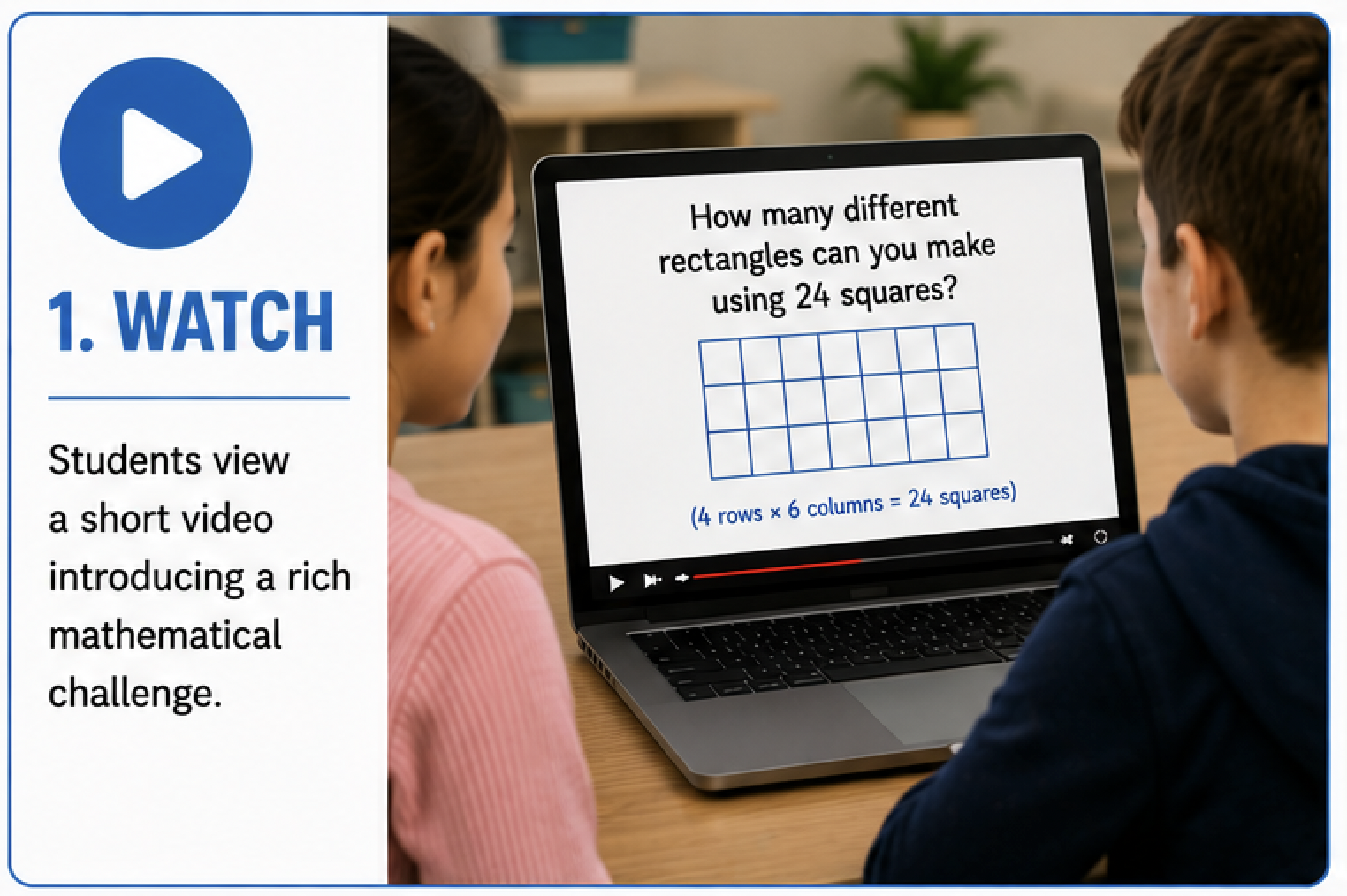
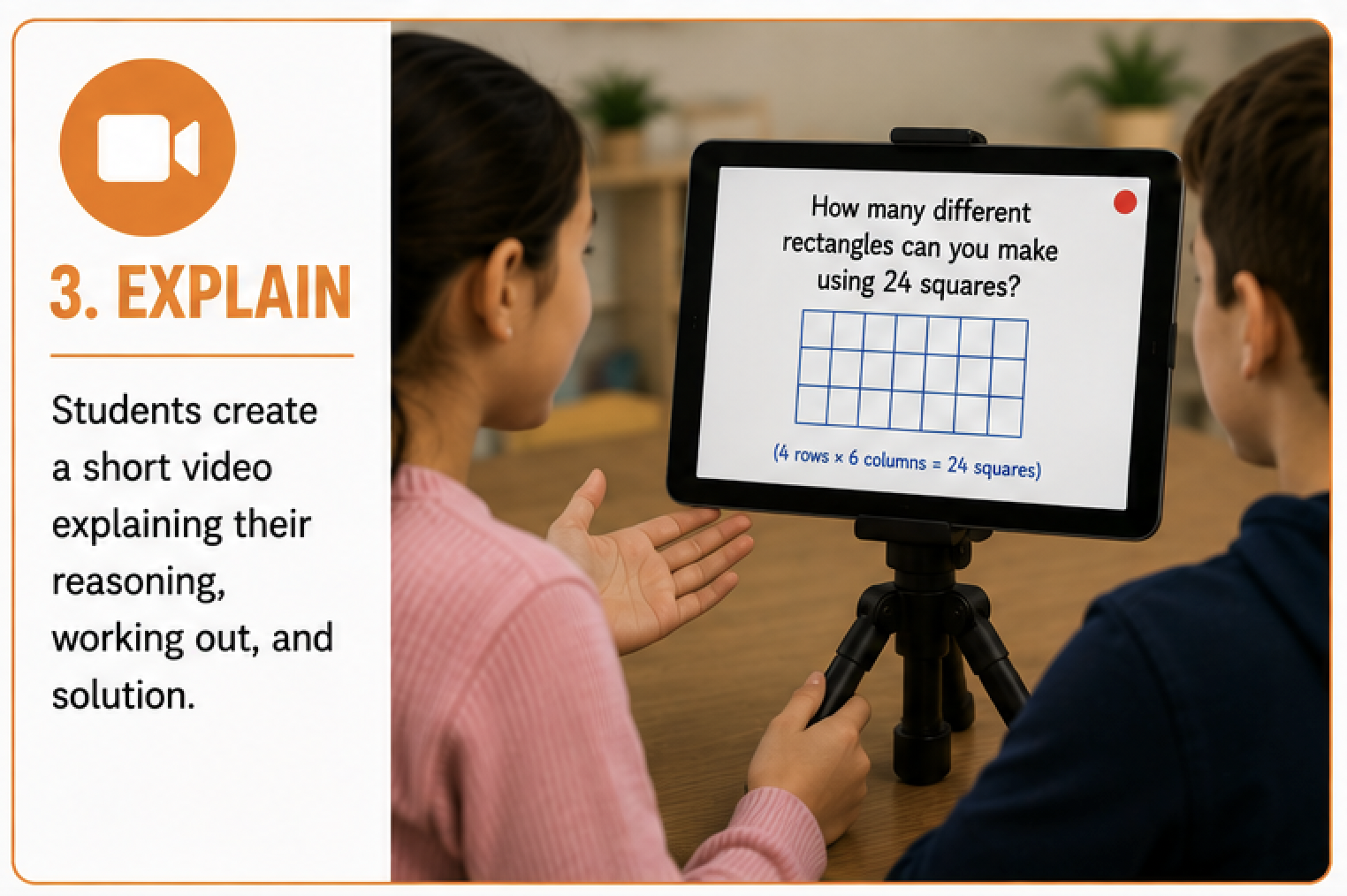
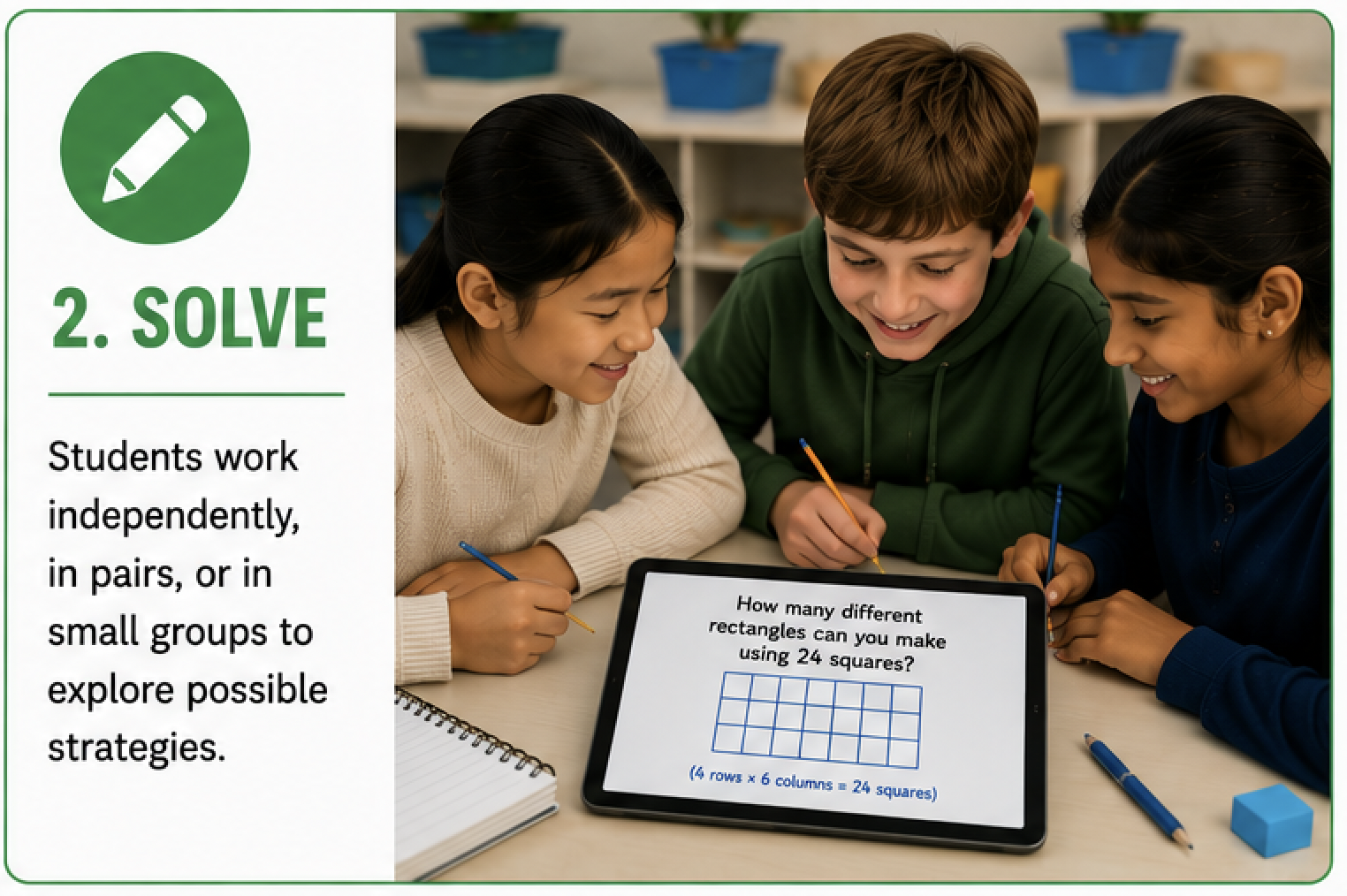
Problem Solving Strategies
The Maths Project is heavily influenced by the work of Peter Sullivan and his research into challenging mathematical tasks.
Sullivan argues that students develop deeper mathematical understanding when they are presented with rich problems that require them to think, reason, and make decisions about how to solve them. Rather than following a prescribed set of steps, students are encouraged to explore different pathways, test ideas, and explain their thinking.
The Maths Project complements explicit teaching and direct instruction models by providing students with opportunities to apply, test, and showcase their mathematical understanding through challenging problem-solving tasks and video explanations.
Five Actions of Successful Problem Solvers
According to Sullivan's research, rich mathematical tasks encourage students to:
Plan their approach before beginning.
Process information and make connections between ideas.
Choose strategies that make sense to them.
Record their thinking and justify their decisions.
Explain and defend their reasoning to others.
These actions develop the mathematical reasoning, communication, and problem-solving skills that students need to become confident and capable mathematicians.
How The Maths Project Brings This To Life
The Maths Project extends Sullivan's model by asking students to create short video explanations of their solutions.
By explaining their thinking on camera, students are encouraged to:
Organise and clarify their reasoning
Use precise mathematical language
Reflect on their strategy choices
Learn from the approaches of others
Develop confidence as mathematical communicators
The goal is not simply to find the correct answer. The goal is to make mathematical thinking visible.
Building better problem solvers, one challenge at a time.
Sample Problem - Two Numbers
This is one of our most popular trial problems, written by Emeritus Professor Peter Sullivan.
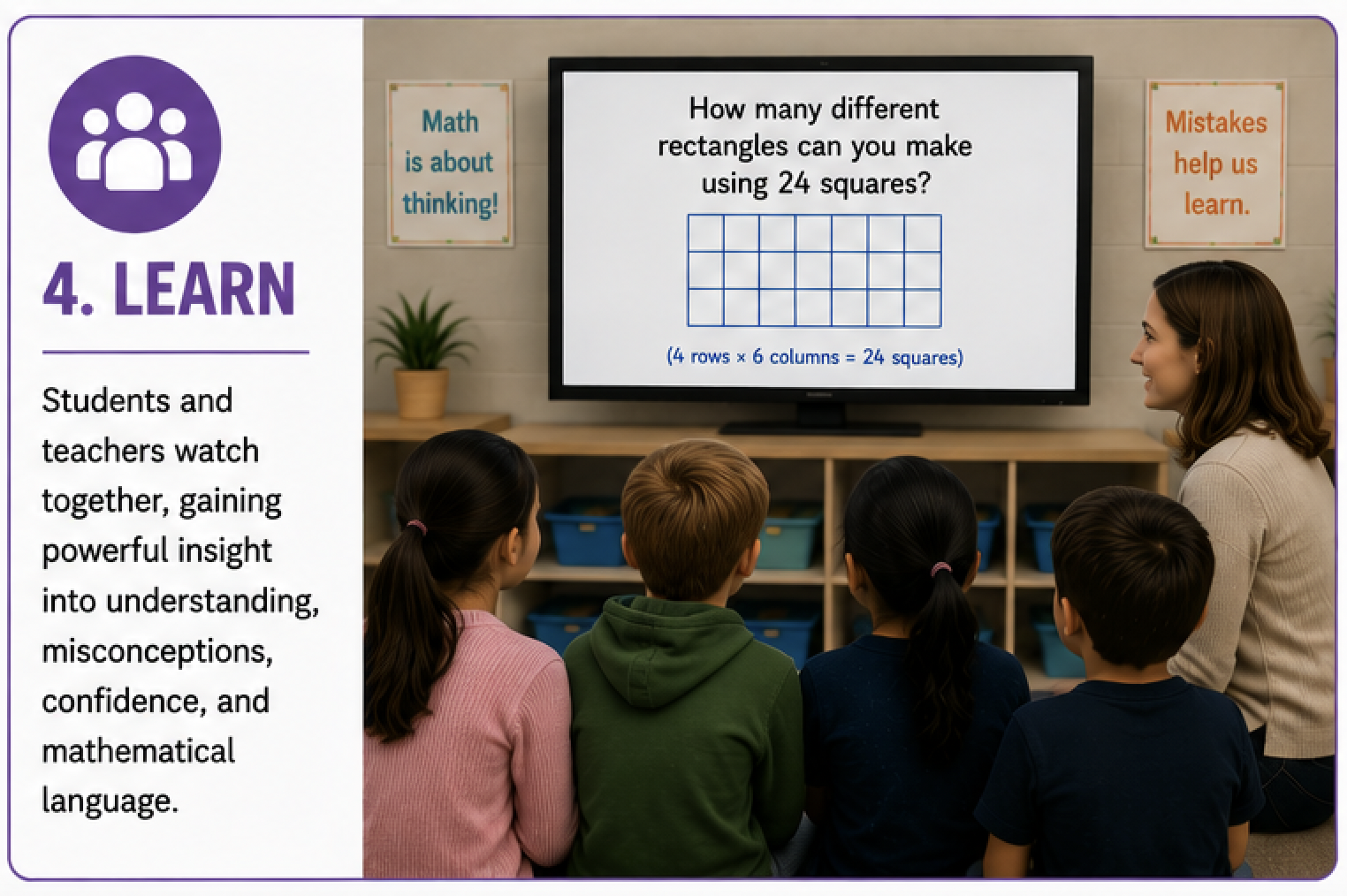
Remember to use the Watch, Solve, Explain and Learn approach.